What Is Addiction?
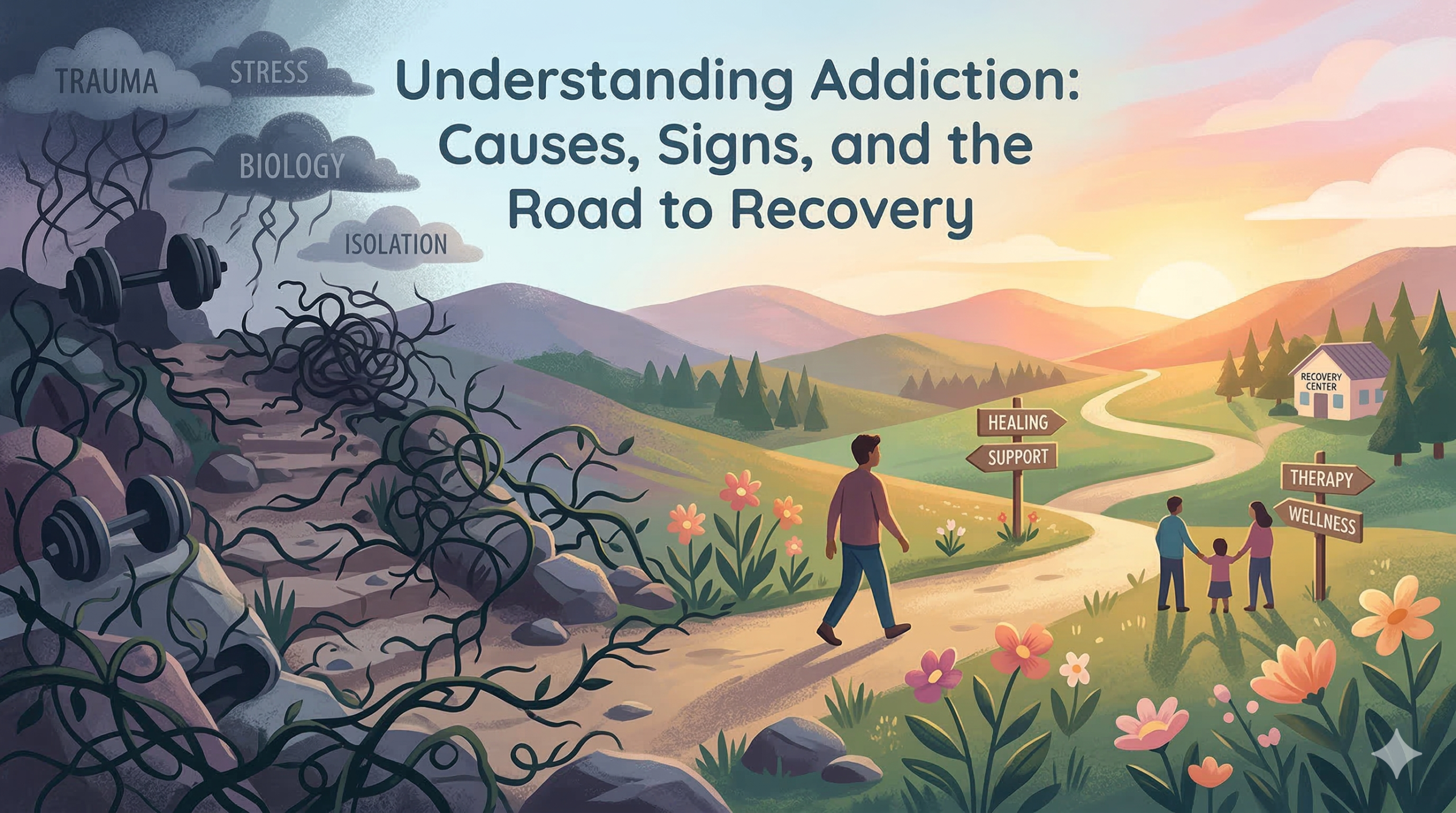
Addiction is a chronic condition where a person compulsively uses a substance or engages in a behaviour despite harmful consequences to health, relationships, work, or finances. Over time, it changes the brain’s reward, motivation, and self-control systems, making quitting much harder without support.
Experts usually talk about two broad types of addiction.
-
Substance addictions: alcohol, nicotine, prescription drugs, and illegal drugs.
-
Behavioural addictions: gambling, gaming, pornography, shopping, or social media when used compulsively.
How Addiction Develops
Addiction rarely happens overnight; it usually progresses through several stages.
-
Experimentation
A person tries a substance or behaviour out of curiosity, peer pressure, or to cope with stress or low mood. At this stage, use often seems harmless and occasional. -
Regular Use
The person starts using more frequently, such as every weekend or daily, to relax, escape, or feel good. Early warning signs like mild cravings or planning around use may appear. -
Risky Use and Dependence
Use continues despite clear problems, such as declining performance at work or school, conflicts at home, or money issues. The body and brain adapt, leading to tolerance (needing more for the same effect) and withdrawal symptoms when not using. -
Addiction
Use becomes compulsive and feels nearly impossible to control. The substance or behaviour becomes the central focus of life, even as serious health, legal, and relationship problems grow.
Causes of Addiction
There is never just one cause of addiction; it usually develops from a mix of biological, psychological, and environmental factors.
Biological and Genetic Factors
-
Family history: Genetics account for a significant part of vulnerability, with estimates suggesting that inherited factors explain roughly 40–60% of the risk for addiction.
-
Brain chemistry: Addictive substances and behaviours trigger powerful surges of dopamine and other neurotransmitters in reward pathways, reinforcing the desire to repeat the experience.
-
Neuroadaptation: With repeated use, the brain becomes less sensitive to natural rewards and more dependent on the addictive behaviour to feel normal.
Psychological Factors
-
Mental health conditions: Depression, anxiety, bipolar disorder, PTSD, and other mental health issues raise the risk of using substances or behaviours as coping tools.
-
Trauma and stress: Childhood abuse, neglect, violence, or major life stressors can make people more vulnerable to addiction as they seek relief from emotional pain.
-
Personality traits: High impulsivity, sensation-seeking, and difficulty regulating emotions are often linked to higher addiction risk.
Environmental and Social Factors
-
Early exposure: The younger a person starts using substances, the higher the chance of developing addiction later.
-
Peer influence and social norms: Friends, family, or communities where heavy use is normal can make risky behaviour feel acceptable.
-
Availability and access: Easy access to alcohol, drugs, gambling, or online platforms increases opportunities for repeated use.
-
Lack of support: Isolation, family conflict, and weak social support systems can push people toward substances or behaviours for comfort.
Common Signs and Symptoms
Recognizing addiction early increases the chances of effective treatment and recovery.
Behavioural Signs
-
Inability to cut down or stop, even after promising to do so.
-
Spending more time, energy, and money on the substance or behaviour than planned.
-
Neglecting responsibilities at work, school, or home.
-
Losing interest in hobbies and activities once enjoyed.
-
Secrecy, lying, or hiding use from loved ones.
-
Continuing use despite clear health, financial, or relationship problems.
Physical Signs
-
Changes in weight, appetite, or sleep patterns.
-
Declining personal hygiene and overall appearance.
-
Unusual tiredness, low energy, or frequent unexplained illnesses.
-
Symptoms of withdrawal, such as shaking, sweating, nausea, or irritability when not using.
Emotional and Mental Signs
-
Increased anxiety, irritability, or mood swings.
-
Feeling guilt, shame, or hopelessness about use but still being unable to stop.
-
Difficulty concentrating, making decisions, or remembering things.
-
Defensiveness or anger when others express concern.
How Addiction Affects the Brain and Life
Long-term addiction affects both brain functioning and day-to-day life in powerful ways.
In the brain, chronic use reshapes circuits involved in reward, motivation, memory, and self-control, weakening a person’s ability to resist cravings. These changes help explain why addiction is considered a chronic, relapsing brain disease rather than simply a lack of willpower.
In daily life, addiction often leads to strained or broken relationships, job loss, financial debt, and legal issues. Physical health may decline through organ damage, infections, accidents, or overdose, while mental health issues like depression and anxiety often worsen.
The Road to Recovery
Recovery is absolutely possible, but it usually requires time, support, and a combination of approaches tailored to the individual.
Admitting the Problem and Asking for Help
Recovery typically starts when a person acknowledges that their use is out of control and causing harm. Reaching out to a trusted friend, family member, doctor, or counsellor is often the first concrete step.
Detox and Medical Support
For many substances, especially alcohol, opioids, and benzodiazepines, medically supervised detox is important to manage withdrawal safely. Health professionals can provide medication and monitoring to reduce complications and discomfort during early abstinence.
Therapy and Rehabilitation
-
Inpatient rehab: Residential programs provide structured, intensive care in a safe setting, away from daily triggers.
-
Outpatient treatment: People live at home but attend regular therapy sessions and group programmes, which can be more flexible around work or school.
-
Counselling and psychotherapy: Approaches like cognitive behavioural therapy (CBT), motivational interviewing, and trauma-informed therapy help people understand triggers, build coping skills, and address underlying emotional issues.
Medication-Assisted Treatment (MAT)
For some addictions—especially opioids, alcohol, and nicotine—medications can reduce cravings, stabilize brain chemistry, and support long-term recovery. These medicines work best when combined with counselling and behavioural therapies.
Support Groups and Community
Peer-support groups such as 12-step programmes and other mutual-help groups connect people who share similar struggles and goals. Regular meetings, sponsorship, and shared experiences provide accountability, encouragement, and a sense of belonging that can be crucial for long-term recovery.
Lifestyle Changes and Aftercare
Developing new routines and healthier coping strategies is key to staying on track. Helpful changes include:
-
Exercise, yoga, or other physical activities to manage stress and improve mood.
-
Better sleep and nutrition to support brain and body healing.
-
Hobbies, learning, or volunteering to rebuild confidence and meaning.
-
Ongoing counselling, check-ins, or sober living environments to reduce relapse risk.
Relapse can happen and is common, especially in the first years of recovery, but it does not mean failure. Instead, it shows that treatment or support plans may need adjustment, and returning to help quickly can get recovery back on course.
Supporting a Loved One with Addiction
If someone close to you is struggling, your response can make a real difference.
-
Learn about addiction to reduce stigma and blame.
-
Speak with empathy, using “I” statements and avoiding shaming language.
-
Encourage professional help and offer to assist with finding services or attending appointments.
-
Set clear, healthy boundaries to protect your own well-being.
-
Consider joining a family or caregiver support group for guidance and emotional support.
Hope and Healing
Addiction is a serious but treatable condition, not a moral failure. With the right mix of medical care, psychological support, community, and personal commitment, many people go on to rebuild healthy, meaningful, and fulfilling lives in recovery.